
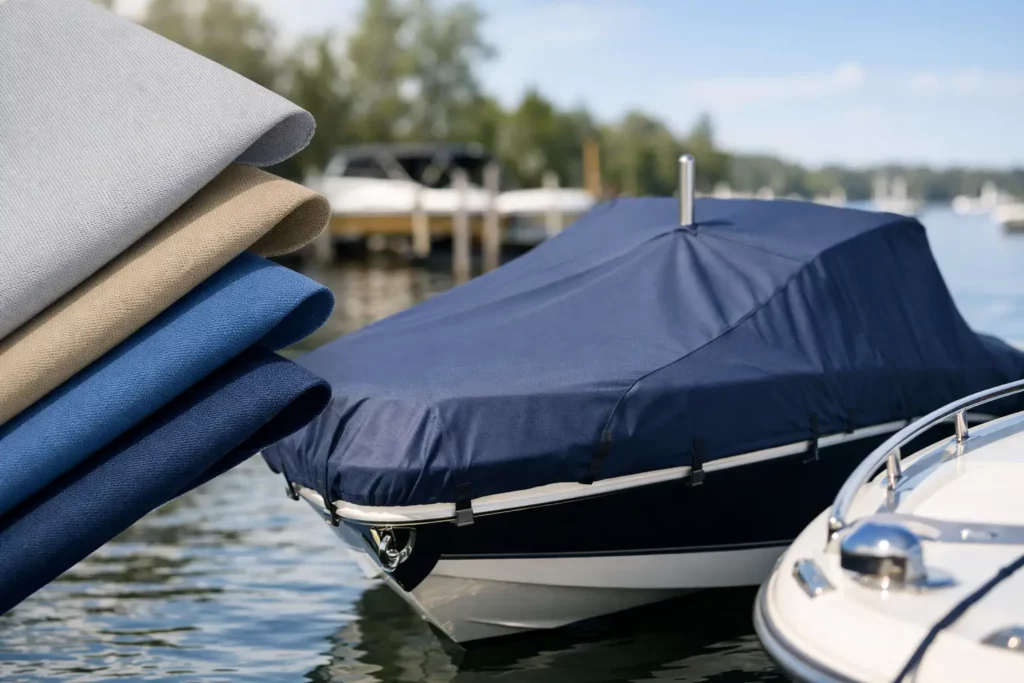
A boat cover usually gets judged after a bad week, not a good one. When your dinghy has sat outside through rain, sun, road grime and a hard tow up the motorway, the fabric either proves itself or it does not. That is why weathermax boat cover material gets plenty of attention from owners who want proper protection without adding unnecessary weight or bulk.
For dinghy and small-boat owners, cover fabric is not a cosmetic detail. It affects how easy the cover is to handle, how well it sheds water, how quickly it dries, and how long it keeps doing its job. Weathermax has built a strong reputation because it sits in a useful middle ground – lighter and more breathable than some heavier coated materials, but still tough enough for demanding marine use when the cover is well designed and correctly fitted.
What is weathermax boat cover material?
Weathermax is a solution-dyed polyester fabric developed for outdoor exposure. In plain terms, the colour runs through the fibre rather than sitting on the surface, which helps with UV resistance and long-term appearance. For boat covers, that matters because fading is often the first sign that a fabric is being beaten by the elements.
The material is known for being water-resistant rather than fully waterproof in the way a heavily coated fabric might be. That distinction matters. A breathable fabric allows moisture vapour to escape, which can reduce condensation under the cover. On a dinghy stored outside for long periods, that can help limit the damp, stale environment that encourages mildew, staining and general wear on fittings, control lines and deck surfaces.
The feel of Weathermax is also part of its appeal. It is relatively supple, easy to fold and easier to manage than stiffer alternatives. If you regularly cover and uncover your boat at the club, at home or at an event, that day-to-day usability counts for a lot.
Why Weathermax boat cover material suits dinghies
Dinghy owners tend to use their covers harder than many larger-boat owners. Covers go on and off more often, boats travel by road, and storage is frequently outdoors in boat parks where exposure is constant. A material that looks good on a specification sheet but is awkward to handle or too heavy for regular use soon becomes a nuisance.
Weathermax boat cover material suits this kind of ownership because it keeps weight down without feeling flimsy. That is useful on trailing covers, where excess weight can make fitting awkward and put strain on attachment points. It also helps with top covers used between club sessions, where one person often has to manage the whole job quickly.
Breathability is another real advantage for small boats. Dinghies often trap water in all the awkward places – under side decks, around buoyancy tank inspection hatches, beneath padded foils bags left on board, or in the folds of a loose cockpit cover. A breathable fabric does not solve poor storage practice, but it can make the environment under the cover less damp than a fully sealed alternative.
The main strengths of Weathermax
The best reason to choose Weathermax is balance. It does several jobs well, which is exactly what most boat owners need.
UV resistance is one of its strongest points. In marine use, sunlight does as much damage as rain. A cover that stands up to prolonged UV exposure will usually hold its colour and performance better over time. That matters whether the boat lives in a club compound through the season or spends months outside at home.
Its light weight is another big plus. Heavier fabric is not always better. On a dinghy, a lighter cover is easier to throw over the hull, easier to tension properly and easier to stow. If a cover is awkward enough that you start skipping its use after sailing, the technical merits become irrelevant.
Weathermax also dries relatively quickly. Anyone who has packed away a soaked cover after a wet event knows the value of that. Faster drying helps with handling and storage, and reduces the chance of the cover itself becoming unpleasant to use.
Then there is abrasion performance. Weathermax is durable, but this is where nuance matters. The fabric can perform very well, yet cover life still depends heavily on how the cover is patterned and where reinforcements are added. Shroud plates, rudder fittings, mast steps, tiller extensions and sharp transom corners can all wear a fabric prematurely if the design does not account for them.
Trade-offs to understand before you buy
No fabric is perfect for every use. If you are deciding between Weathermax and a heavier PVC-coated or acrylic option, the right answer depends on how the boat is stored and transported.
Because Weathermax is breathable and relatively lightweight, it is not the same thing as a thick, heavily coated fabric built mainly for maximum water barrier and brute toughness. In prolonged standing water, poor cover tension, or badly supported flat sections, even a good material can struggle. If rainwater is allowed to pool, the issue is often the cover shape rather than the cloth alone.
For hard towing use, the fabric quality is only one part of the picture. A trailing cover has to fit tightly, avoid flutter, and be reinforced at wear points. A badly fitted trailing cover made from an excellent fabric can fail faster than a properly made cover from a less celebrated material.
Cost is another consideration. Weathermax is generally chosen as a premium fabric option. For owners keeping an older training boat under basic shelter, that may be more than they need. For newer dinghies, race boats or boats stored outside year-round, the extra spend can be easier to justify.
Weathermax compared with other boat cover fabrics
Most buyers are really comparing outcomes rather than chemistry. They want to know whether the cover will last, whether the boat stays cleaner and drier, and whether the fabric is worth the money.
Against basic polyester fabrics, Weathermax usually offers a clear upgrade in feel, durability and UV performance. It tends to look and handle like a better-grade product, and that often shows in long-term use.
Against PVC-coated materials, Weathermax generally wins on breathability, weight and ease of handling. PVC-style fabrics may offer a more aggressive water barrier, but they can be heavier, stiffer and less forgiving in everyday use. For some owners, especially with boats stored outside in all seasons, breathability is the bigger advantage.
Against acrylic marine fabrics, the decision can be closer. Acrylics are well regarded for weather exposure, but Weathermax remains attractive where owners want a lighter, technical fabric that still feels durable and practical for regular covering and towing duties.
What matters as much as the fabric
A good cover is never just fabric. On dinghies, patterning and finish make a huge difference.
Support is critical. If the cover does not shed water properly, you will get pooling, extra strain and poor protection. That means the boom, support battens or cover supports need to create proper runoff. Fabric choice cannot compensate for a poor shape.
Fit matters just as much. A loose cover rubs, flaps and wears. A cover that is too tight can stress seams and fittings. For class-specific dinghies, proper design around the hull shape, mast position and deck layout is what turns a quality fabric into a quality product.
Reinforcement is another key detail. If a Weathermax cover is built for real use, it should account for contact points and chafe zones. This is especially important for trailing covers, where motorway movement amplifies every weak point.
Is Weathermax right for your boat?
If you own a dinghy, skiff, small sailing boat or club racer and want a cover that is durable, breathable and easier to live with than heavier alternatives, Weathermax is a strong choice. It is particularly well suited to owners who use the boat regularly and need a cover that can be fitted, removed and stored without a fight.
It also makes sense where the boat spends long periods outside. In UK conditions, that usually means a mix of rain, UV, dirt and constant temperature swings rather than one single extreme. A breathable, UV-stable fabric is well suited to that pattern of use.
If your priority is the toughest possible barrier for static storage in a very exposed setting, or if the cover is likely to suffer constant hard abrasion, then it is worth checking whether a heavier material might suit that specific job better. But for many dinghy owners, the real-world balance of Weathermax is exactly the point.
At a specialist retailer such as CB Boat Trailer and Cover Store, the more useful conversation is often not whether Weathermax is good in general, but whether it is right for your class, your storage setup and the way you actually use the boat. That is the level where cover decisions become worthwhile.
Caring for a Weathermax cover
Even premium fabric needs basic care. Salt, dirt and bird mess should not be left to sit for months if you can avoid it. Gentle cleaning with fresh water and allowing the cover to dry before long-term storage will help preserve performance and appearance.
It is also worth checking wear points through the season. Small chafe issues are easier to deal with early than after a hole has formed. If the cover starts rubbing on fittings, the answer may be a support adjustment or reinforcement rather than replacing the whole thing.
The best boat cover material is the one that still works after repeated launches, towing miles and another wet winter in the boat park. Weathermax earns its place because, when paired with proper design and fit, it meets that test in a way many dinghy owners will appreciate.